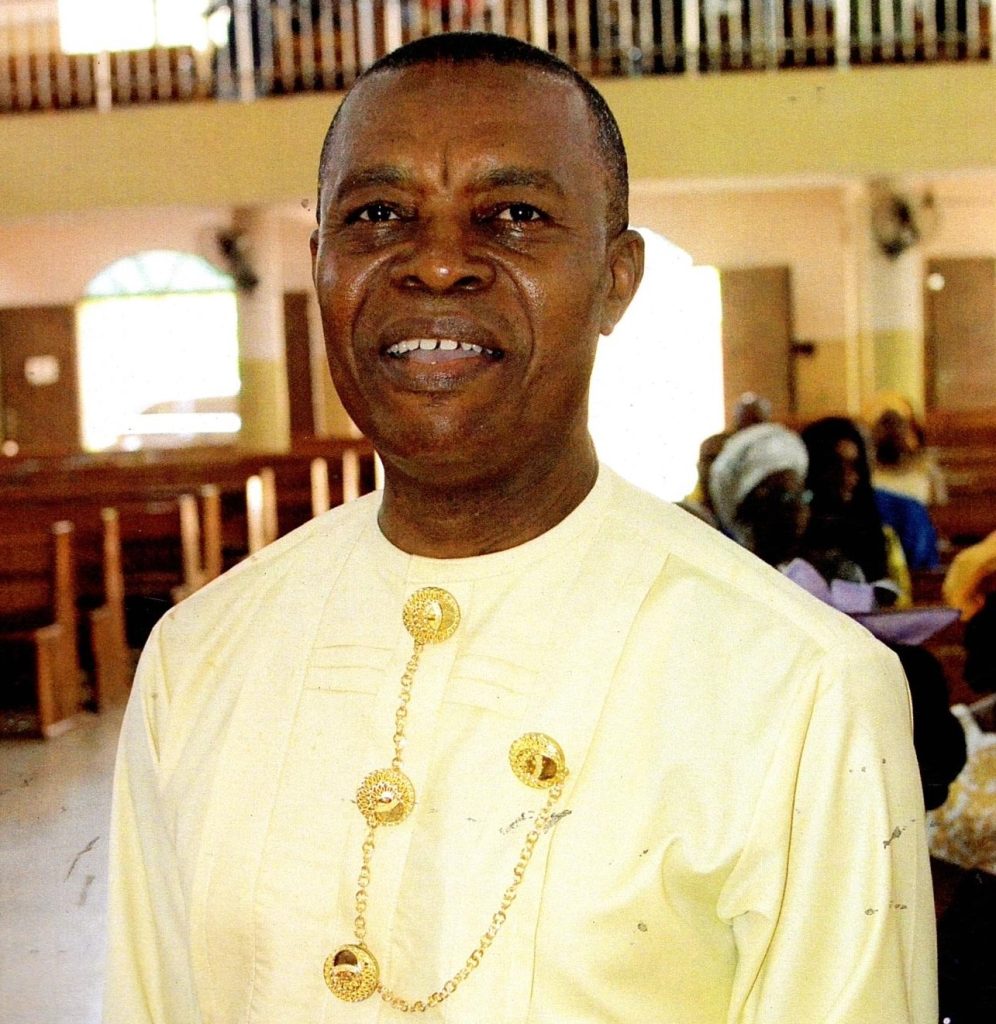
DR. UZODINMA ADIRIEJE LEADS AHOA DIALOGUE ON DISASTER RISK REDUCTION, COMMUNITY RESILIENCE AND HEALTH
Abuja, Nigeria — 23 June 2026
Dr. Uzodinma Akujekwe Adirieje, Chief Executive Officer/Programmes Director of the Afrihealth Optonet Association (AHOA), led the 24th AHOA Life and Health Dialogue Session, bringing together experts and stakeholders from Africa, the Caribbean, Asia and Latin America to examine the urgent links between disaster risk reduction, community resilience and health. The hybrid session, held on Tuesday, 23 June 2026, provided a multidisciplinary platform for government representatives, development partners, civil society organizations, academia, the private sector and other stakeholders to consider how communities and health systems can better anticipate, prepare for, withstand and recover from disasters.
DR. ADIRIEJE PROVIDES STRATEGIC LEADERSHIP AND DIRECTION
Dr. Adirieje formally convened and opened the dialogue, served as its Moderator, and provided the strategic framing for the discussions. In welcoming participants, he emphasized that disasters can no longer be treated as isolated emergencies or the responsibility of government alone. Increasingly frequent and complex events—including flooding, disease outbreaks, climate-related hazards, environmental pollution, fires, building collapse, conflict, displacement, food insecurity and water scarcity—are simultaneously development, humanitarian and public-health challenges.
He stressed the importance of moving decisively from a predominantly reactive disaster-response approach to prevention, preparedness and resilience, noting that communities that are informed, organized and prepared are better positioned to reduce losses and recover more rapidly. Dr. Adirieje also emphasized that resilient health systems must be capable of anticipating, absorbing and responding to shocks while maintaining essential health services. He identified emergency preparedness, surveillance, primary healthcare, medical supplies, trained health personnel, laboratory capacity, risk communication, mental-health support and digital health technologies among the critical components of health-system resilience.
CHAMPIONING COMMUNITY-CENTRED DISASTER PREPAREDNESS
A central feature of Dr. Adirieje’s leadership was his emphasis on community participation and shared responsibility. He challenged the notion that disaster management should be left primarily to government institutions, calling instead for meaningful contributions from communities, CSOs and NGOs, traditional and religious leaders, academic institutions, the private sector, the media and other actors. He encouraged practical community-level measures including hazard and vulnerability mapping, local emergency plans, volunteer emergency response teams, first-aid training, health and safety education, simulation exercises, early reporting and stronger local communication systems.
Dr. Adirieje further engaged participants on the need to address behavioural responses during emergencies. Following an account of a house fire and community crisis in Kaduna shared by Dr. Taofik Kolawole, he reflected on the tendency of bystanders to record disasters on mobile phones rather than immediately assisting people in distress. The discussion reinforced the need to build a stronger culture of preparedness, volunteerism, mutual support and responsible action.
CONNECTING DISASTER RISK REDUCTION WITH HEALTH, CLIMATE AND SUSTAINABLE DEVELOPMENT
Under Dr. Adirieje’s moderation and strategic guidance, the dialogue connected disaster risk reduction with broader health, climate and sustainable-development priorities. The discussions highlighted the consequences of disasters for mortality and injuries, maternal and child health, mental health and psychosocial well-being, nutrition, WASH, infectious diseases and the continuity of essential health services. Dr. Adirieje positioned the dialogue within the framework of SDG 3 on Good Health and Well-being, SDG 11 on Sustainable Cities and Communities, SDG 13 on Climate Action, and the Sendai Framework for Disaster Risk Reduction 2015–2030. He underscored the importance of integrating climate adaptation, environmental sustainability and disaster-risk reduction into development and health planning.
INTERNATIONAL AND CROSS-REGIONAL PERSPECTIVES
The dialogue benefited from contributions by distinguished discussants from several regions Prof. Tony Danso-Appiah — Ghana; Ekaette Anwana, Esq. — Nigeria; Augustine Nyakatoma — Tanzania; Nicole S. Hendrickson — Trinidad and Tobago/Caribbean; Dr. Anima Sharma — India; Ailin Katherine Palmera Amaya — Mexico; and Mohamadou Barkissou — Benin. Other contributions came from participants including Dr. Taofik Kolawole, Professor Chinelo Nwokolo, Babangida Sani and Frank.
The international perspectives demonstrated that disaster vulnerability takes different forms across regions but produces common challenges for health, livelihoods and community resilience. Nicole Hendrickson highlighted the particular research-financing challenges confronting Caribbean small island developing states, while participants from Nigeria and Tanzania drew attention to flooding, climate-related risks and the need for stronger local preparedness. A significant dimension of the conversation was the relevance of disaster resilience to refugees and displaced persons, who often face heightened exposure to health, environmental, WASH, food-security and protection risks during emergencies.
FROM DIALOGUE TO ACTION
Dr. Adirieje’s leadership also extended beyond the live discussion to documentation, participant follow-up and development of practical frameworks. As agreed in the session’s resolutions, Dr. Adirieje will facilitate the transmission of meeting documents and follow-up materials to participants who complete the required information template. The meeting organizers will also consider incorporating group-based preparedness interventions, hazard mapping and indigenous knowledge systems into future approaches to disaster preparedness.
The dialogue called on:
Civil society organizations and NGOs to strengthen community awareness, train local volunteers, map hazards and build local emergency-response capacity.
Government agencies to improve cross-sectoral coordination, integrate disaster-risk reduction into local development planning, remove policy barriers that can delay emergency treatment, and adequately resource community preparedness teams.
Local communities to establish volunteer emergency-response structures, promote health and safety education, strengthen mutual-support networks and move away from passive observation towards responsible action during crises.
‘AHOA’S CONTINUING COMMITMENT
The 24th Life and Health Dialogue reaffirmed AHOA’s commitment to providing platforms for evidence-informed dialogue, policy engagement, knowledge exchange, capacity development and multisectoral collaboration on health and sustainable development. Through his role as CEO/Programmes Director and his leadership of the Life and Health Dialogue Series, Dr. Uzodinma Adirieje continues to position AHOA as a platform through which experts, institutions, communities and development actors can move from discussion to practical recommendations, partnerships and action. The 24th session therefore reinforced a central message championed by Dr. Adirieje: disaster risk reduction is a shared responsibility, prevention is better than costly emergency response, strong communities are built through preparedness and inclusion, and resilient health systems are essential to resilient societies.